After last August’s meeting between the Russian and American presidents in Alaska, a new phrase entered diplomatic circulation: the “spirit of Anchorage.” The substance of the talks was never officially disclosed and can only be reconstructed from selective leaks. The form, however, was striking: a personal greeting, an honor guard, a shared limousine. Symbolism mattered. It was meant to signal seriousness.
Yet the question remains: what exactly was born in Anchorage? And does it belong in the lineage of earlier diplomatic “spirits” that once defined entire eras?
The term itself is not new. Before Anchorage, there was the “spirit of Yalta,” the “spirit of Helsinki,” and, briefly, the “spirit of Malta.” All three marked turning points in relations between the great powers during the second half of the twentieth century. Yalta in 1945 laid the foundations of the post-war world order, recognizing the USSR and the United States as its central pillars. Helsinki in 1975 codified that order, even as it quietly set the stage for its eventual erosion. Malta in 1989 symbolized the end of the Cold War and, with it, the division of Europe.
These meetings differed in format and outcome. Yalta brought together three victorious powers dividing spheres of influence. Helsinki was the product of prolonged multilateral negotiations designed to stabilize a tense status quo. Malta was a bilateral encounter that effectively ratified the retreat of one side under the banner of a “new world order.” But they shared one defining feature: each sought to determine the parameters of the international system itself.
Does Anchorage belong in this tradition?
Formally speaking, the Alaskan talks focused on Ukraine. That immediately raises a fundamental question. How realistic is it to reach a durable settlement without the direct participation of one of the warring parties? Such an approach is only viable if one of the interlocutors, in this case the United States, is both willing and able to compel Kiev to accept decisions taken without it.
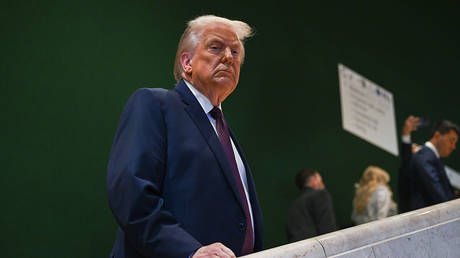
Events since August suggest that Washington lacks this capacity, despite its considerable leverage. A more convincing explanation, however, is that it lacks the motivation. Donald Trump has made resolving the Ukrainian conflict a matter of personal prestige. But prestige is not the same as strategic necessity. For Trump and the narrow circle around him, the precise configuration of a settlement matters less than the avoidance of an outright Russian victory. Beyond that, the exact line of demarcation, and the conditions under which it is maintained, are not critical.
The United States would only deploy the full weight of its political and economic power if it perceived these negotiations as shaping a new world order. That was the case at Yalta, Helsinki, and Malta. It is not the case today.
Moscow, by contrast, has invested Anchorage with precisely this broader meaning. From the very beginning of the military operation, Russia has framed the conflict not primarily in territorial terms, but as a question of European security architecture. Territory has, inevitably, grown in importance over time. But the core issue has remained unchanged: the principles governing security on the continent.
Today, this is often described as the question of “security guarantees for Ukraine.” In reality, it concerns the broader system within which such guarantees would exist. This may ultimately prove the most serious obstacle to any agreement.
Washington’s approach is different. The current American administration does not think in terms of comprehensive frameworks or shared rules. Its vision of world order is far more fragmented and instrumental. Control is exercised through economic pressure, military presence, and political leverage applied selectively to specific regions and problems. It is a model of targeted intervention rather than systemic design. A kind of forceful acupuncture.
In this context, agreements are not about principles, but about transactions. They are designed to deliver concrete, often mercantile, outcomes rather than to establish enduring rules of interaction. Ukraine, from this perspective, is one issue among many, not the axis around which a new order would be built.
If the goal is merely a political settlement of the Ukrainian conflict, the Russian-American format is insufficient. Ukraine itself would have to be involved, as would Europe. While Europe’s strategic weight is limited, it retains a significant capacity to obstruct any settlement it finds unacceptable. Ignoring this reality would be a mistake.
For the “spirit of Anchorage” to stand alongside Yalta, Helsinki, and Malta, it would need to aim higher: at the construction of a new global political system to replace the one that emerged after the Second World War and has endured, in various forms, for nearly 80 years.
Washington does not see Moscow as a central interlocutor in such a project. At most, this role is tentatively assigned to China. However, even that is far from settled. As a result, the “spirit of Anchorage” hovers uneasily between two incompatible interpretations of what the conversation is actually about.
From the Russian perspective, it is about redefining the foundations of European and global security. From the American side, it is about managing a specific conflict without altering the broader architecture of power. When the parties are not even discussing the same subject, the risk is obvious.
In such circumstances, the “spirit” inevitably fades, becoming less a guiding force than a rhetorical shadow. A ghost of an agreement that never quite came into being.
Could this change? Possibly, but only if events intervene that force both sides to move beyond regional calculations and confront the need for a more fundamental reordering. Until then, Anchorage remains suspended between ambition and reality, its promise unfulfilled.
This article was first published by Rossiyskaya Gazeta, and was translated and edited by the RT team

Comments :
Post a Comment